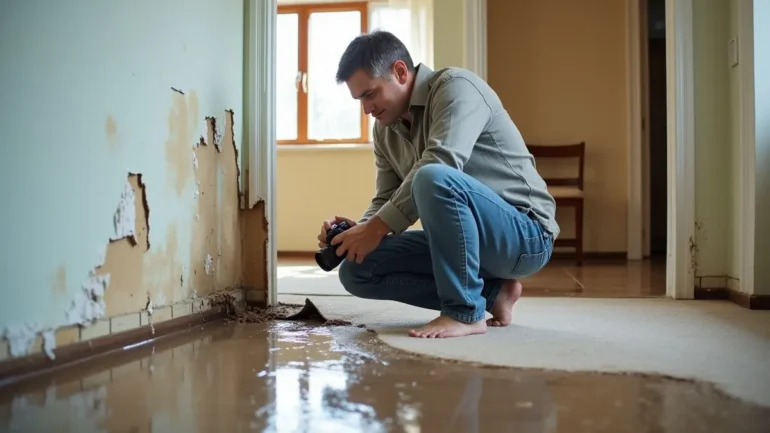
Water damage is a fast-forward peril. The instinct to start pulling up wet carpet or tearing out soaked drywall makes sense, but doing that before you document the damage is one of the costliest mistakes a homeowner can make. According to the Insurance Information Institute (III), water damage and freezing account for the second most common type of home insurance claim, with an average payout around $12,500. Getting your fair share of that depends less on the damage itself and more on how well you can prove it.
The Duty to Mitigate – and Why it Cuts Both Ways
Most standard homeowners policies (the HO-3 is the most common) include a “duty to mitigate” clause. That means you’re required to take reasonable steps to stop the damage from spreading – shutting off the water source, calling a water mitigation company, getting drying equipment in place. If you don’t, the insurer can deny part or all of your claim on the grounds of negligence.
But here’s where homeowners get tripped up: mitigation is not the same as demolition. You can remove standing water. You can set up air movers and dehumidifiers. What you should not do is rip out drywall, pull flooring, or discard damaged materials before an adjuster has seen the site. Once that evidence is gone, it’s gone. Take photos and video of every affected surface before anything is removed. Shoot from multiple angles. Get close-ups of waterlines, staining, and delamination. That footage is your claim.
Sudden vs. Gradual – the Distinction That Decides Most Denials
The most frequent reason why claims of water damage are rejected is because of the gradual damage. For example, if there is a slow leak behind the wall for months, in that case, most policies would not cover it. What is covered is sudden and accidental discharge, if a pipe bursts, a washing machine hose fails, or a roof is punctured in a storm.
Adjusters are taught to look for the long-term evidence of moisture: stains, mold, rust, or degrading caulk. If your claim includes a pipe that has failed suddenly, make sure that your documentation reinforces this case of events. A plumber’s written report or a photo showing a clearly ruptured fitting, for example, can be very helpful. If there is any pre-existing moisture issue in the area, disclose it, better not to camouflage as it could lead to bigger problems than upfront acknowledgment.
What Happens Between Emergency Mitigation and the Adjuster Visit
Once you’ve halted the incoming water and commenced drying operations, you have an approximately 48-hour window to begin stabilization efforts. Tampa Emergency Restoration Pros can shore up the premises, creating the detailed records (readings, affected area, comprehensive drying records meeting IICRC S500 standards) the insurance company requires to settle a claim in full. Miss this step or fail to have a firm with the technology and know-how do the work, and you’re likely to face discussions for the rest of the claim. In other words, it will become a game of arguing about the numbers rather than simply getting paid.
Once you have proposals from the restoration company, request a detailed itemized scope of work with costs associated in Xactimate. That’s the same estimating software used by most insurance companies. If items aren’t lining up, this is the juncture at which you might want to think about getting a public adjuster involved, an individual hired to negotiate the best possible settlement for the policyholder.
Your Rights During the Claims Process
There are a few things people often don’t realize: First, you don’t have to use the contractor your insurance company recommends. Preferred vendor programs wouldn’t exist if those contractors didn’t agree to such things as 10-20% betterments (replacement of undamaged or aged materials to match new materials), price structures or timelines that aren’t always in the best interest of the policyholder. But, they do. So, you as the policyholder can also choose your own licensed contractor. In most cases, the adjuster is required to work with and pay whatever qualified company you decide upon.
You will also have to file a proof of loss statement which is a signed document from you to your insurer that outlines the extent of the damage and the amount you are claiming. Most policies have a deadline on submitting the proof of loss. It is usually within 60 days of the request.
The initial drying phase following a flood is the most important time to reduce or eliminate long-term damage. If you’re uninformed or for whatever reason don’t allow the drying to be completed as per IICRC standards (usually 72 hours or what is scientifically dry), and secondary damage, in the form of mold, develops the insurer often has the right to separate the claims and cap them at the limit/ less any deductible on secondary damage. This could leave you holding the bag on anything that spills over your limit into your own wallet.
Avoid the problems
As most problems, the above also can be avoided. Document when your water event occurred, and when drying equipment was set. Some insurers also place stipulations regarding what types of drying methods they will cover or the amount of equipment, documenting when the event happened can help ensure they don’t attempt to place unnecessary restrictions. The other milestone to document for adjusting secondary damage allows them to try to tie it to your water event. That’s just another reason why taking grandma’s advice of “document, document, document” is always good advice.
Lastly, most homeowners don’t even realize their policy pays out actual cash value versus replacement cost value. ACV will give you a depreciated amount for like kind and quality which can often be one-third to one-half the cost to fully replace everything you have damaged. For example, a damaged eight-year-old hardwood floor could be paid out (depending on the lifetime/age of that flooring) at 2/3 of what it was purchased for. RCV pays you the ACV upfront less the depreciation once the work has been completed and invoiced. Stick to your guns and request the holdback. It is also suggested that you do not sign over the full replacement cost. This amount may be obtained on your final invoice. ACV is by far the most unjust way to pay a policyholder on a mid-sized claim and often costs them thousands of dollars.
Getting Paid What the Damage is Actually Worth
The restoration process isn’t just repair work, it’s an evidence-building phase that runs parallel to your insurance claim. Homeowners who treat it that way, document thoroughly, understand their policy terms, and work with contractors who produce adjuster-ready paperwork are the ones who come out with fair settlements. The ones who don’t are left negotiating from a weak position or absorbing costs out of pocket that should have been covered.